

Sometimes you want the generated output to be valid JSON with predefined fields. You can use
Grammar to manually specify a JSON schema for the response you want to receive.- Python
- Swift
- TypeScript
- Rust
1
Create a new project
uv init demo && cd demo
2
Install dependencies
uv add uzu
3
Paste into main.py
import asyncio
import json

from pydantic import BaseModel

from uzu import (
    ChatConfig,
    ChatMessage,
    ChatReplyConfig,
    Engine,
    EngineConfig,
    Grammar,
    ReasoningEffort,
)


class Country(BaseModel):
    name: str
    capital: str


class CountryList(BaseModel):
    countries: list[Country]


def structured_response(response: str | None, model_type: type[BaseModel]) -> BaseModel | None:
    if not response:
        return None
    return model_type.model_validate_json(response)


async def main() -> None:
    engine_config = EngineConfig.create()
    engine = await Engine.create(engine_config)

    model = await engine.model("alibaba:qwen3.5:0.8b:mirai:mirai-m:4")
    if model is None:
        raise RuntimeError("Model not found")
    async for update in (await engine.download(model)).iterator():
        print(f"\rDownload progress: {update.progress:.2%}", end="", flush=True)
    print()

    schema_string = json.dumps(CountryList.model_json_schema())
    messages = [
        ChatMessage.system().with_reasoning_effort(ReasoningEffort.Disabled),
        ChatMessage.user().with_text(
            "Give me a JSON object containing a list of 3 countries, where each country has name and capital fields"
        ),
    ]

    session = await engine.chat(model, ChatConfig.create())
    replies = await session.reply(
        messages,
        ChatReplyConfig.create().with_grammar(Grammar.JsonSchema(schema_string)),
    )
    if replies:
        countries = structured_response(replies[0].message.text, CountryList)
        print(countries)


if __name__ == "__main__":
    asyncio.run(main())
4
Run the snippet
uv run main.py
1
Create a new SwiftUI project
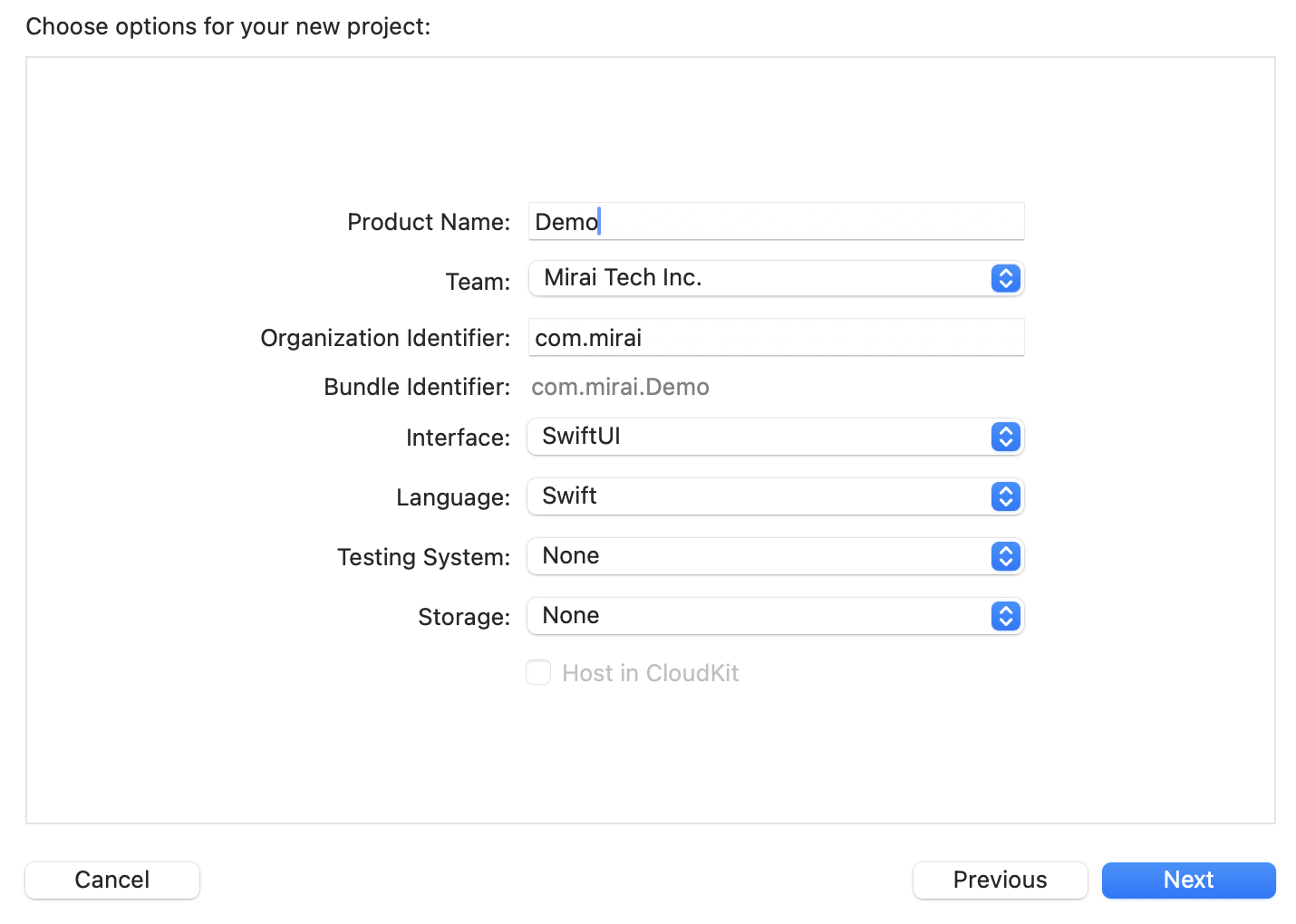
2
Add the SDK
Add this package through SPM:
https://github.com/trymirai/uzu.git
3
Paste the snippet
import Foundation
import FoundationModels
import Uzu

@Generable()
struct Country: Codable {
    let name: String
    let capital: String
}

public func runChatStructuredOutput() async throws {
    let engineConfig = EngineConfig.create()
    let engine = try await Engine.create(config: engineConfig)

    guard let model = try await engine.model(identifier: "alibaba:qwen3.5:0.8b:mirai:mirai-m:4") else {
        return
    }
    for try await update in try await engine.download(model: model).iterator() {
        print(String(format: "\r\u{001B}[2KDownload progress: %.2f%%", update.progress() * 100), terminator: "")
        fflush(stdout)
    }
    print()

    let messages = [
        ChatMessage.system().withReasoningEffort(reasoningEffort: .disabled),
        ChatMessage.user().withText(text: "Give me a JSON object containing a list of 3 countries, where each country has name and capital fields")
    ]

    let session = try await engine.chat(model: model, config: .create())
    let reply = try await session.reply(input: messages, config: .create().withGrammar(grammar: .fromType([Country].self)))
    guard let message = reply.last?.message else {
        return
    }
    guard let countries: [Country] = message.textDecoded() else {
        return
    }
    print(countries)
}
4
Add the snippet call
var body: some View {
    VStack {
        Text("On-device AI")
    }
    .onAppear() {
        Task {
            try await runExampleName()
        }
    }
}
1
Make a new project folder
mkdir demo && cd demo
2
Initialize with pnpm
pnpm init
3
Install dependencies
pnpm add typescript ts-node @types/node -D
pnpm add @trymirai/uzu
4
Initialize a tsconfig.json
{
    "compilerOptions": {
        "target": "es2020",
        "module": "commonjs",
        "moduleResolution": "node",
        "strict": true,
        "esModuleInterop": true,
        "outDir": "dist",
        "types": [
            "node"
        ]
    },
    "include": [
        "*.ts"
    ]
}
5
Create main.ts
import { ChatConfig, ChatMessage, ChatReplyConfig, Engine, EngineConfig, GrammarJsonSchema, ReasoningEffort } from '@trymirai/uzu';
import * as z from "zod";

const CountryType = z.object({
    name: z.string(),
    capital: z.string(),
});
const CountryListType = z.array(CountryType);

function structuredResponse<T extends z.ZodType>(response: string | null | undefined, type: T): z.infer<T> | undefined {
    if (!response) {
        return undefined;
    }
    const data = JSON.parse(response);
    const result = type.parse(data);
    return result;
}

async function main() {
    let engineConfig = EngineConfig.create();
    let engine = await Engine.create(engineConfig);

    let model = await engine.model('alibaba:qwen3.5:0.8b:mirai:mirai-m:4');
    if (!model) {
        throw new Error('Model not found');
    }
    for await (const update of await engine.download(model)) {
        process.stdout.write(`\rDownload progress: ${(update.progress * 100).toFixed(2)}%`);
    }
    console.log();

    let schema = z.toJSONSchema(CountryListType);
    let schemaString = JSON.stringify(schema);
    let messages = [
        ChatMessage.system().withReasoningEffort("Disabled" as ReasoningEffort),
        ChatMessage.user().withText('Give me a JSON object containing a list of 3 countries, where each country has name and capital fields')
    ];

    let session = await engine.chat(model, ChatConfig.create());
    let reply = await session.reply(messages, ChatReplyConfig.create().withGrammar(new GrammarJsonSchema(schemaString)));
    let message = reply[0]?.message;
    let countries = structuredResponse(message?.text, CountryListType);
    console.log(countries);
}

main().catch((error) => {
    console.error(error);
});
6
Run the snippet
pnpm ts-node main.ts
1
Create a new project
cargo new demo && cd demo
2
Install dependencies
cargo add uzu --git https://github.com/trymirai/uzu
cargo add tokio --features full
3
Paste into src/main.rs
use std::io::{self, Write};

use schemars::{JsonSchema, schema_for};
use serde::{Deserialize, Serialize};
use uzu::{
    engine::{Engine, EngineConfig},
    types::{
        basic::{Grammar, ReasoningEffort},
        session::chat::{ChatConfig, ChatMessage, ChatReplyConfig},
    },
};

#[derive(Debug, Serialize, Deserialize, JsonSchema)]
struct Country {
    name: String,
    capital: String,
}

#[derive(Debug, Serialize, Deserialize, JsonSchema)]
struct CountryList {
    countries: Vec<Country>,
}

#[tokio::main]
async fn main() -> Result<(), Box<dyn std::error::Error>> {
    let engine_config = EngineConfig::default();
    let engine = Engine::new(engine_config).await?;

    let model = engine.model("alibaba:qwen3.5:0.8b:mirai:mirai-m:4".to_string()).await?.ok_or("Model not found")?;
    let downloader = engine.download(&model).await?;
    while let Some(update) = downloader.next().await {
        print!("\r\u{001B}[2KDownload progress: {:.2}%", update.progress() * 100.0);
        io::stdout().flush()?;
    }
    println!();

    let schema_string = serde_json::to_string(&schema_for!(CountryList))?;
    let messages = vec![
        ChatMessage::system().with_reasoning_effort(ReasoningEffort::Disabled),
        ChatMessage::user().with_text(
            "Give me a JSON object containing a list of 3 countries, where each country has name and capital fields"
                .to_string(),
        ),
    ];

    let session = engine.chat(model, ChatConfig::default()).await?;
    let chat_reply_config = ChatReplyConfig::default().with_grammar(Some(Grammar::JsonSchema {
        schema: schema_string,
    }));
    let replies = session.reply(messages, chat_reply_config).await?;
    if let Some(reply) = replies.first()
        && let Some(text) = reply.message.text()
    {
        let parsed: CountryList = serde_json::from_str(&text)?;
        println!("{parsed:#?}");
    }

    Ok(())
}
4
Run the snippet
cargo run --release